

TL;DR: For 15-plus years I've bought insurance through independent agents who shop the whole market instead of selling one brand. The payoff shows up everywhere: a homeowners quote that came in lower than the teaser instead of higher, agreed-value coverage for a specialty vehicle nobody else would touch, and one agency that handled my business insurance and shopped term life across 30-plus carriers. Everyone should shop around - an independent agent is how you shop dozens of companies with one phone call.
Most people buy insurance from whoever they saw in the last commercial - an agent who can only sell one company's policies. For more than 15 years, I've done it differently: I use independent agents who shop the whole market for me. It has saved us real money and a lot of hassle, across homeowners, auto, a specialty vehicle, term life, and a stack of business coverage.

Several carriers' quotes for the same home and auto, laid side by side - one agent comparing them all is the whole point of going independent.
Captive vs. independent
A captive agent works for one carrier. If that company hikes your rate at renewal, the agent can't do much - their only product just got more expensive.
An independent agent represents many carriers at once. When your rate jumps, they re-shop it across all of them and move you to whoever's best right now. Same agent, same phone number, no starting from scratch.
The online quote sites that promise the world
You know the pitch: enter your info, get an instant quote, switch in fifteen minutes. I've had horrifically crappy experiences with most of these sites. They dangle a fake number to get you in the door, and then the real quote - the one after they actually look at your situation - is a completely different, much higher figure. It's depressingly silly.
That's also why I've never bought from Progressive or GEICO. I've checked them plenty of times; their rates were just never the best for me. Nothing against them - the point is you can't know who's cheapest for your house, your cars, and your driving history until you actually put them all side by side. Everyone should shop around. An independent agent is simply the most efficient way to do it: dozens of carriers, one conversation.
The rare online experience that actually worked: The Zebra
The big exception was The Zebra. They behaved like an independent shop instead of a bait-and-switch funnel. I used them for homeowners (they do auto and more too, but homeowners is where they earned it for me). We ran through something like a hundred questions - thorough, not a five-field teaser - and when the real quote came back it was about $18 less than the number the site first showed me, not more. After a bait-and-switch site, a quote that comes in under the estimate is almost startling. The whole experience was exceptional.
Then we adjusted some of the coverage details together and got it down another few hundred dollars. That's what a good shopping experience feels like: somebody putting the whole market in front of you and then tuning the policy to fit, instead of hiding the real price until the last screen.
A local agent I used for years: Barber Insurance Agency
For a long stretch I used Barber Insurance Agency, a local independent agency in Apex, NC that I found through Ramsey Solutions' insurance referral program. They did an exceptional job laying out the options. Because they're a local agent, I could go in in person, sit down, and walk through the scenarios - what changes if I raise the deductible, bundle the auto, add an umbrella. That face-to-face, "let's run the numbers together" experience is something no quote site replicates, and it's one of the quiet advantages of an independent agent: a real human who shops for you and explains the trade-offs.
When you own something unusual: Grundy and agreed value
Standard auto policies are built for standard cars. They pay "actual cash value" - whatever a claims adjuster says your car is worth after depreciation - which is a disaster for anything collectible, modified, or genuinely special.
I have a specialty vehicle that needed agreed value coverage: you and the insurer agree up front, in writing, on exactly what the vehicle is worth, and that's what you're paid if it's totaled. No depreciation argument, no lowball. Grundy found me a policy that covers those vehicles that way, at a genuinely affordable price. Most captive agents simply can't write that - it's not in their one company's lineup. An independent (or a specialty carrier like Grundy) is how you find the one company whose "appetite" matches your odd situation.
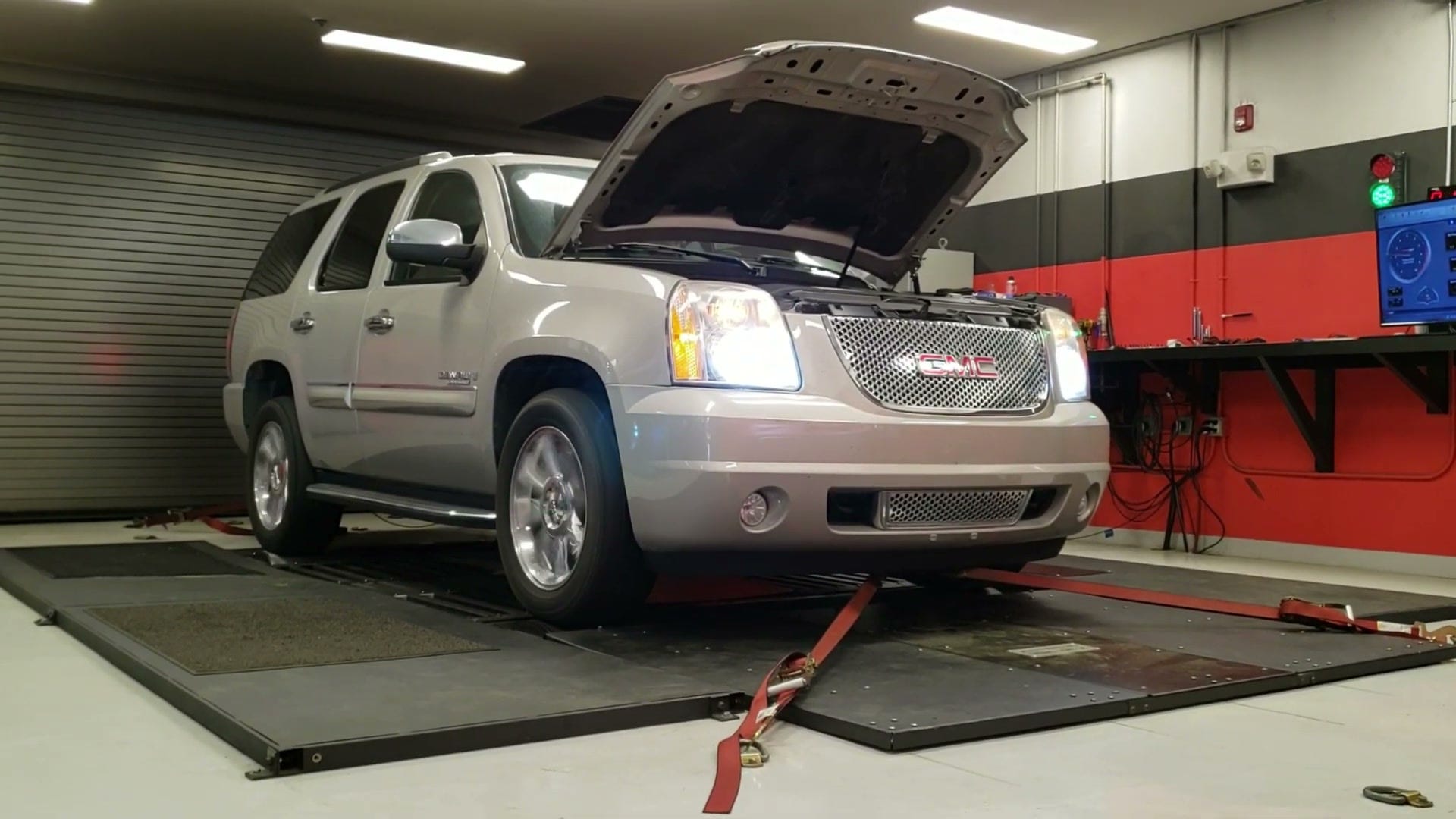
My supercharged Yukon Denali on the dyno - exactly the kind of modified vehicle that needs agreed value, where you and the insurer set the figure up front instead of arguing depreciation after a total loss.
The one agency that did soup to nuts: Woodbury & Co
For years I ran a lot through Woodbury & Co - they wrote pretty much every type of insurance imaginable. I used them mostly for business insurance, and for group health, dental, and vision for the team, and they were awesome to deal with. They'd also shop term life across 30 or 40 different companies to find the best rate on identical coverage. Everything, soup to nuts, under one roof. (Woodbury is now part of CRC Group.)
That's the part people miss about going independent: it's not just home and auto. The right agent becomes the single front door for almost every line you'll ever need - personal, specialty, and business - and they re-shop each one instead of letting it quietly drift up in price.
Why does an independent agent actually save money?
Every carrier has a different "appetite." One is cheap for a paid-off house, another for a household with teen drivers, another for a higher-value home, another for a modified car. You can't see that from the outside, but a good independent agent knows which company wants your business and will price it lowest. You also stop paying the loyalty tax - the slow rate creep that builds up when you never re-quote.
How to find a good one
Look for an independent agent or broker, not a single-brand office.
Ask how many carriers they write, and whether they automatically re-shop at renewal.
Bring your current declarations pages so they can quote apples-to-apples.
If you own something unusual - a collectible, a modified vehicle, a small business - ask specifically whether they can place specialty and commercial lines, or know a specialty carrier who can.
Fifteen minutes with the right agent can quietly save you hundreds a year, every year, for coverage that actually fits.
Key takeaways
A captive agent sells one company; an independent agent shops dozens, so when your rate jumps they move you instead of shrugging.
Most online quote sites bait you with a fake low number and reveal the real (higher) price later - shopping the whole market avoids that game.
The Zebra was the rare exception: a thorough quote that came in ~$18 under the teaser, then a few hundred lower after tuning the coverage.
A local independent agent (I used Barber Insurance Agency in Apex, NC, a Ramsey Solutions referral) lets you sit down in person and walk through scenarios.
Specialty vehicles need agreed value, not actual cash value - Grundy wrote that affordably when a standard policy couldn't.
One independent agency can cover soup to nuts: home, auto, specialty, term life shopped across 30-plus carriers, and business lines like workers' comp and health.
Frequently asked questions
What's the difference between a captive and an independent agent?
A captive agent represents one insurance company and can only sell that company's policies. An independent agent represents many carriers, so they can compare prices across all of them and move you to whoever is cheapest for your situation - now and at every renewal.
Are online quote sites like The Zebra worth it?
Most quote sites show a low teaser number and then quote you something much higher once they have your details. The Zebra was the exception for me: a thorough hundred-question homeowners quote that actually came in about $18 under the estimate, and a few hundred dollars lower after we adjusted the coverage. The lesson isn't "use one site," it's "shop the whole market" - which is exactly what a good independent agent does.
Why not just use Progressive or GEICO?
No knock on them - I've checked their rates many times and they simply were never the cheapest for me. You can't know who's lowest for your specific home, cars, and history until you compare them all side by side, which is the whole point of going independent.
What is agreed value insurance and who needs it?
Agreed value means you and the insurer agree in writing, up front, on exactly what your vehicle is worth, and that's what you're paid if it's totaled - no depreciation fight. It matters for collectible, classic, or modified vehicles that a standard "actual cash value" policy would badly underpay. Specialty carriers like Grundy write it; most single-brand auto agents can't.
Can an independent agent handle business insurance too?
Yes. A full-service independent agency can cover workers' comp, group health, dental, and vision, and shop term life across dozens of carriers - alongside your home and auto. One agency I used (Woodbury & Co, now part of CRC Group) handled all of it under one roof.
Have you ever switched to an independent agent, or gotten burned by a bait-and-switch quote site? Let me know in the comments.